An Ecological Approach to a Teenage Epidemic
Updated: Mar 26, 2024
Blog Post Co-Authored by Carolyn Grono

The Ecological Model of Health is a multilevel approach to decision making in public health issues. This model emphasizes environmental and policy factors while incorporating psychological influences (Glanz, Ch 20). The Ecological Model tackles health decision-making by addressing the following levels: individuals (biological, psychological), interpersonal (social), organizational, community, and policy (Glanz, Ch. 20).
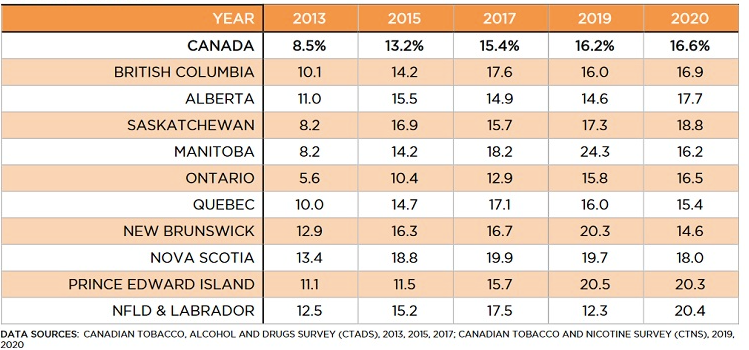
Ecological multilevel framework has been used widely in smoking cessation by public health agencies, with success (Glanz, Ch.20). In this article, we seek to identify differences in smoking practice between Ontario and Alberta. We will analyze provincial initiatives based on the Ecological Model of Health and compare how each province plans to combat this public health concern on an individual, interpersonal, organizational, community and policy level. Recently, there has been a notable increase in youth smoking/vaping and applying a multilevel framework to help reduce tobacco use could have significant health benefits. The chart below shows the increase in tobacco use across Canada.
Youth Smoking/Vaping in Ontario
Public Heath Ontario (PH) has noted that vaping is the most common nicotine use among youth (Public Health Ontario, n.d.). In 2021, 19% of students grade 7-12 reported using a vaping device, compared with 9% reporting use of a tobacco cigarette (Ministry of Health, Impact, 2023). PH research advises the most common reasons youth have reported vape use are anxiety, stress, sadness, and boredom (Public Health Ontario, n.d.). Furthermore, PH found the most common reasons youth reported quitting were health concerns and accessibility. Ontario has focused on individual and policy changes to increase smoking/vape cessation.
Individual. At the individual level, it is important to investigate the individual demographics (age, gender, race, school performance), health related issues (exposure to smoking/vaping), and mental health (depression, high/low stress, suicidal ideation) (Han & Son, 2022). In Ontario, officials have focused on providing mental health and addictions support to youth, in combination with education surrounding smoking/vaping. Primarily, with respect to youth smoking/cape cessation, Ontario has developed a mobile app (research has shown positive change associated with using apps for youth behaviours).
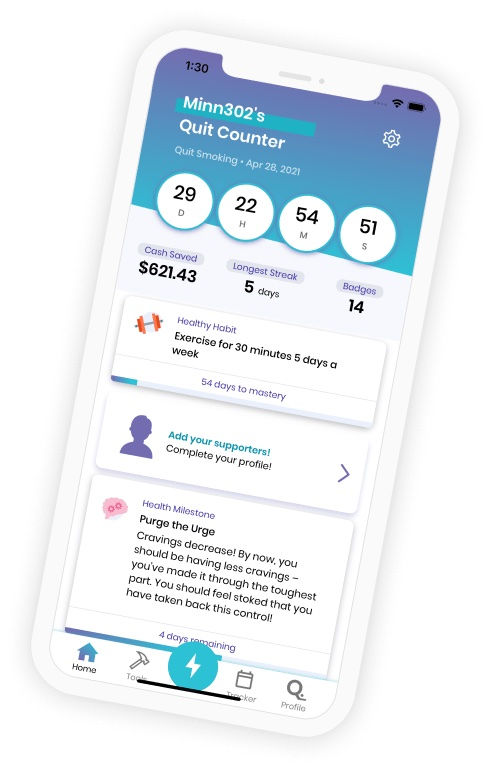
QUASH APP: “A judgement free app to help you quit smoking or vaping – the way you want!” (Curtis & Kaufman, 2021). The free app helps you with cessation by customizing goals, designing a plan, and offering tools. This app was developed in conjunction with the Lung Health Foundation and is geared toward youth behaviours (Curtis & Kaufman, 2021). The app focuses on changing behaviours and providing evidence-based information “on the health and psychosocial risks associated with smoking and vaping among youth (Curtis & Kaufman, 2021)”
(Quashapp.com, 2024)
MH & ADDICTIONS SUPPORT: “Ontario will provide frontline providers such as schools, universities, colleges, and health care providers with tools and resources to better support Ontario’s youth struggling with vaping and nicotine addiction. This is part of the cross-government approach to build a better mental health and addictions system (Ontario Protecting Youth, 2021)."
HEALTH811 EXPANSION: You can call or text health811 directly for tips on smoking cessation. They can further connect you to problem specific resources including 911 and family doctor (Ontario Protecting Youth, 2021).
OTTAWA QUIT SMOKING PROGRAM: This program is covered by the Ontario Health Insurance Plan. It is a nurse led and individualized to guide and support attempts at cessation (Quit Smoking Program, 2024). Efforts are focused on breaking habits associated with smoking through addressing it as a learned behaviour (Quit Smoking Program, 2024). Approaches look at breaking the cycle by addressing physical dependence, behavioural conditioning, and social aspects of smoking (Quit Smoking Program, 2024).
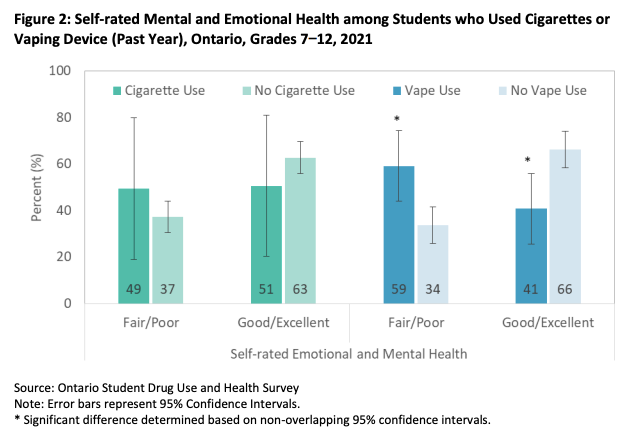
(Ministry of Health, 2023)
Interpersonal
The biggest interpersonal factors at play that influence the decision to use are friends, family, and exposure to smoking by these groups (Han & Son, 2022). There are few programs implemented specifically to address the need for changes to the interpersonal factors, many of which coincide with individual and policy levels. The Ottawa Heart Institute and its program has a focus on social aspects of smoking. They focus on the difficulty of overcoming dependence when you try to quit with ongoing exposures (Quit Smoking Program, 2024).
Community
Community factors that were identified were home (living with smokers/vapers), family structure, socioeconomic status, and smoking/vaping bans in schools (Han & Son, 2022).
I will speak further on the Smoke Free Act, 2017 in the policy section, but it is important to note that its implementation banned smoking/vaping in public spaces, which limits community exposure for our youth.
Policy
Ontario has put significant focus on policy changes at the regulatory level to address smoking/vaping in youth. The policy level of the Ecological Model of Health aims to address regulations, price, and advertising regulations.
SMOKE FREE ACT, 2017: This act states you cannot smoke or vape in any enclosed workplace or public space, or any space that is designated as smoke free. Failure to comply is associated with fines (Ontario Protecting Youth, 2021). This will have a direct effect on youth exposure to smoking and vape use.
FORD VAPE TAX: Ontario government opted into the federal vape tax which will increase prices with the intent to deter use. “Taxation is one of the more effective policy measures to reduce consumption and is particularly impactful among price- sensitive youth.” (Heart & Stroke Foundation of Canada, 2023)
RESTRICTIONS ON VAPE SALES: Restriction on sale of flavors in non-specialty shops, restriction on nicotine levels in non-specialty shops, restriction on sale to minors, reduction in visibility (vape shops must have their windows blocked so you cannot see into the store) (Ontario Protecting Youth, 2021).
Youth Smoking/Vaping in Alberta
In 2020, smoking prevalence in Alberta was 8.9%, with an equal percent of male and female smokers (Reid et al., 2022).
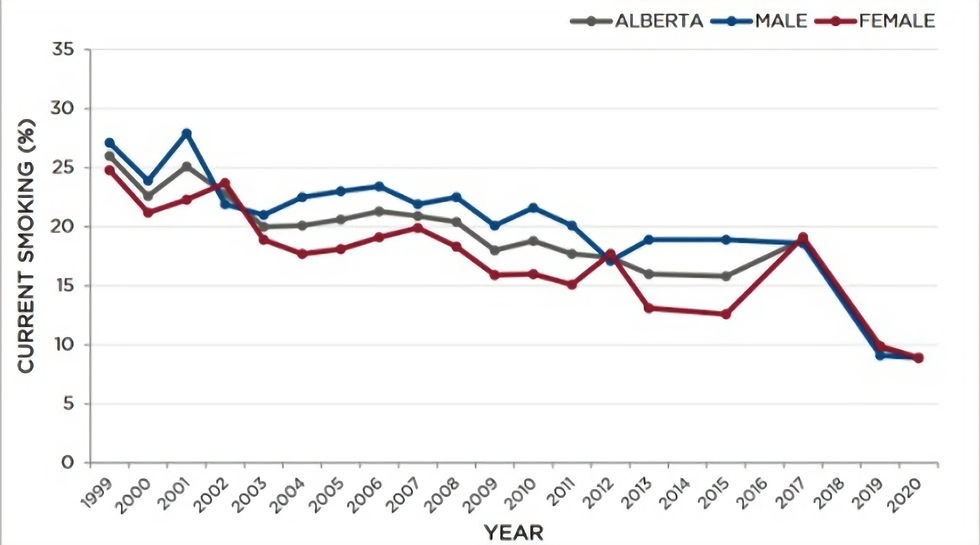
(Reid et al., 2022)
Youth smoking rates are on the rise in Alberta and 13% of teenagers aged 12-19 continue to smoke (Alberta Policy Coalition for Chronic Disease prevention, 2020). The introduction of vaping products in Alberta has increased the numbers of adolescent users by 16% between 2013 and 2020 (Government of Alberta, 2023).
The reasons behind the increase in use of tobacco and vaping products is multifactorial and includes parental smoking, low socio-economic status, peer/family influence, misinformation about health consequences of smoking, easy access to tobacco products, influence of marketing and tobacco promotions, mental health, stress, and depression. (Canadian Pediatric Society, 2022).
Intrapersonal
Alberta acknowledges that tobacco use is influenced by where people live, race and ethnicity, age, education, income, and poverty (Government of Alberta, 2023). Despite a significant reduction in smoking over the past few decades, research shows that the incidence of smoking is disproportionally concentrated in disadvantaged communities (ASH, n.d.). In 2013, the Canadian Institute for Health Information, (2024) reported that the number of smokers in the lowest income level was two times higher than the number of smokers in the highest income level. According to the World Health Organization, increasing tax on tobacco is the most effective measure for decreasing smoking, particularly in youth and low-income groups. (WHO, 2024).
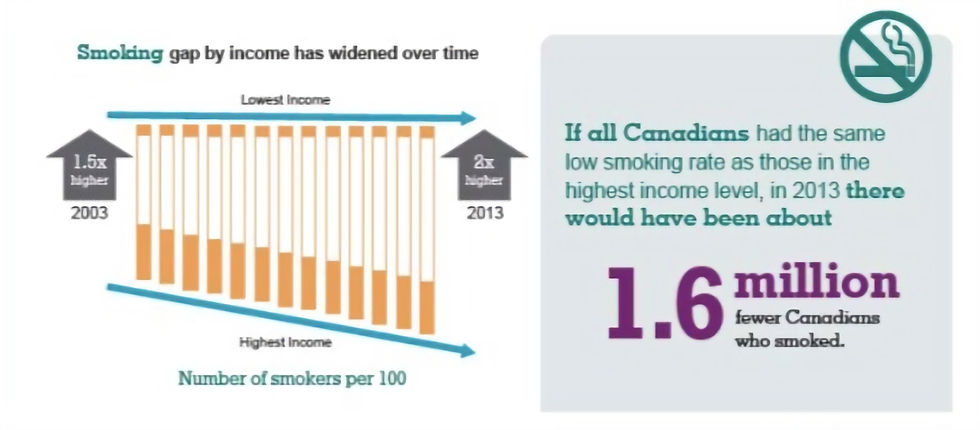
(CIHI, 2024).
The Alberta Government is addressing health disparities related to commercial tobacco and vaping products with public health campaigns, bans on tobacco sales to minors, education, taxation, and free smoking cessation programs (Government of Alberta, 2023). Alberta Health Services (AHS) has developed a website to help people prepare to stop smoking and provides resources that allow individuals to build a smoking cessation plan, identify triggers, attend group support meetings, and free counselling sessions. (Alberta Health Services, 2024c).

(AlbertaQuits, AHS, 2024)
Interpersonal
The interactions that youth have with their peers and families influence their likelihood of smoking/vaping. Most young smokers obtain tobacco within their social networks, and almost half of 15- to 18-year-olds obtain smoking products free from family, and friends (Canadian Pediatric Society, 2022). Alberta has developed a tobacco and vaping prevention program which provides teaching strategies to help teens gain the necessary skills to avoid smoking and vaping (Alberta Health Services, 2024a). This initiative is intended to improve social competence and boost teens ability to handle challenges, make decisions and solve problems, cope with stress and resist influence (Alberta Health Services, 2024a)
Community
Alberta communities help people quit smoking or never start smoking, by incorporating activities to change social, physical, and economic aspects in neighborhoods (Alberta Health Services, 2024b). A study by Lovato et al. (2013) found that school settings that support prevention and have policies prohibiting smoking on school property are most effective in decreasing teen tobacco use. Students that attend schools with stronger tobacco prevention programs and high tobacco taxes in their communities are less likely to smoke (Lovato et al., 2013). AHS has developed awareness and education campaigns for youth and encouraged community schools to de-normalize smoking to make tobacco less acceptable (2024b). Positive reinforcement and rewarding youth for good behaviors that benefit the community are also promoted within Alberta communities (Alberta Health Services, 2024b).
Policy
Local, provincial, and federal policies and laws regulate and support smoking prevention and cessation strategies. Alberta’s Tobacco, Smoking and Vaping Reduction Act (TSVRA) came into force in 2021 and aims to reduce the health impacts associated with smoking and second-hand smoke and address the rise in youth vaping (Government of Alberta, 2024a). The TSVRA enforces restrictions on possession, promotion, display, sale, and use of tobacco and vaping products to help de-normalize the consumption of tobacco and vaping products in Alberta (Government of Alberta, 2024a). Alberta Health has also created a Tobacco and Vaping Enforcement Program, which has been operational since January 2022 and works to improve compliance with the TSRVA by inspecting and educating tobacco and vaping retailers to ensure adherence (Government of Alberta, 2024a).
A comparison: Ontario vs. Alberta
Ontario and Alberta are addressing youth smoking and vaping with similar strategies. On the intrapersonal level, both provinces have focused on free quit smoking apps, health promotion, text links and resources designed to support smoking cessation plans. Ontario has implemented additional services to support mental health challenges related to smoking cessation. Both provinces address interpersonal factors by focusing on social aspects of smoking. Ontario offers programs to help youth overcome dependence when they are faced with ongoing exposures; whereas Alberta takes a more proactive approach by developing strategies for teachers to help teens gain the necessary skills to avoid smoking and vaping and managing peer pressures. Community factors for both provinces concentrate on banning smoking/vaping in public spaces and providing education campaigns for youth within their communities. There has been a significant focus on policy in both provinces with the creation of regulations that enforce underage sale laws and increased price/taxation on tobacco/vaping products. Ontario's policy on restrictions of vape sales is comparable to Alberta’s Tobacco, Smoking and Vaping Reduction Act (TSVRA) that enforces restrictions on possession, promotion, display, sale, and use of tobacco and vaping products.
Conclusion
Smoking is linked to thousands of new cancers annually and is the leading cause of preventable disease and death in Canada (Alberta Health Services, 2023b). Studies on youth smoking/vaping widely report on the need to address covariates and the interaction at a multilevel. Layman et al., (2022) note that covariates such as socio-economic status and mental health should be investigated to understand the relationship of smoking and vaping on youth. A heavy focus on policy level change has a top-down approach. Making the changes at an access, legal, and visibility level brings attention to the issue, decreases youth exposure, and limits the number of youths who start smoking and vaping. Ontario and Alberta have implemented important measures to combat the increase in teen smoking/vaping, but a sustained and targeted approach will be necessary to enact measurable and long-term change.
References
Alberta Health Services. (2024a). Strengthen tobacco and vaping prevention. Strengthen tobacco and vaping prevention - Get ideas that work - Take Action - Healthier Together Schools. https://schools.healthiertogether.ca/en/take-action/get-ideas-that-work/strengthen-tobacco-and-vaping-prevention/
Alberta Health Services. (2024b). Tobacco reduction. Tobacco Reduction - Focus Areas - Take Action - Home - Alberta Healthy Communities Hub - Take Action - Home - Alberta Healthy Communities Hub. https://albertahealthycommunities.healthiertogether.ca/take-action/strategy-kits/tobacco-reduction/
Alberta Health Services. (2024c). Welcome to albertaquits. AlbertaQuits. https://albertaquits.healthiertogether.ca/
Alberta Policy Coalition for Chronic Disease prevention. (2020, May 22). Action on smoking & health: Alberta smoke-free policy hub . Action on Smoking & Health: Alberta Smoke-Free Policy Hub . https://abpolicycoalitionforprevention.ca/resources/ash-smoke-free-policy-hub/
ASH Canada. (n.d.). Achieving equity to eliminate tobacco‐related disparities. Action on Smoking & Health. https://www.ash.ca/health_equity
Canadian Institute for Health Information. (2024). Smoking gap by income has widened over time. CIHI. https://www.cihi.ca/en/smoking-gap-by-income-has-widened-over-time
Canadian Tobacco, Alcohol, and Drugs Survey (CTADS), 2013, 2015, 2017. Canadian Tobacco and Nicotine Survey (CTNS), 2019, 2020.
Canadian Pediatric Society (2022). Preventing smoking in children and adolescents: Recommendations for practice and policy. Canadian Pediatric Society. https://cps.ca/en/documents/position/preventing-smoking
Curtis, S., & Kaufman, P. (2021, June 15). Quash: a behavioral approach to youth vaping and smoking cessation. Lung Health Foundation.
Glanz, K., Rimer, B. K., & Viswanath, K. (2008). Health Behavior and Health Education: Theory, research and Practice /Karen Glanz, Barbara K. Rimer and K. Viswanath, editors (4th ed.). John Wiley.
Government of Alberta. (2023, May 13). Creating tobacco-free futures : Alberta’s strategy to prevent and reduce tobacco use 2012-2022. Creating tobacco-free futures : Alberta’s strategy to prevent and reduce tobacco use 2012-2022 - Open Government. https://open.alberta.ca/dataset/9780778583592
Government of Alberta. (2024a). Reducing smoking and vaping – rules and Enforcement. Alberta.ca. https://www.alberta.ca/reducing-smoking-and-vaping-rules-and-enforcement
Han, G., & Son, H. (2022). A systematic review of socio-ecological factors influencing current e-cigarette use among adolescents and young adults. Addictive Behaviors, 135(107425), 1–22. https://doi.org/10.1016/j.addbeh.2022.107425
Heart & Stroke Foundation of Canada. (2023, November 2). Heart & stroke applauds Ontario government for opting into Vape Tax. Heart & Stroke applauds Ontario government for opting into vape tax. https://www.heartandstroke.ca/what-we-do/media-centre/news-releases/heart-and-stroke-applauds-ontario-government-for-opting-into-vape-tax
Layman, H. M., Thorisdottir, I. E., Halldorsdottir, T., Sigfusdottir, I. D., Allegrante, J. P., & Kristjansson, A. L. (2022). Substance use among youth during the COVID-19 pandemic: A systematic review. Current Psychiatry Reports, 24(6), 307–324. https://doi.org/10.1007/s11920-022-01338-z
Lovato, C., Watts, A., Brown, K. S., Lee, D., Sabiston, C., Nykiforuk, C., Eyles, J., Manske, S., Campbell, H. S., & Thompson, M. (2013). School and community predictors of smoking: a longitudinal study of Canadian high schools. American Journal of Public Health, 103(2), 362–368. https://0-doi-org.aupac.lib.athabascau.ca/10.2105/AJPH.2012.300922
Ministry of Health, Impact of the COVID-19 pandemic on youth smoking, vaping, and mental health (2023). King’s Printer. Retrieved February 25, 2024, from https://www.publichealthontario.ca/-/media/Documents/nCoV/epi/covid-19-epi-impact-mental-health-youth-cigarette-vape-users.pdf?rev=96e928f8dd484713b85c688f3ee6afc2&sc_lang=en#:~:text=In%202021%2C%2019%25%20of%20students,cigarette%20in%20the%20past%20year.
Ministry of Health. (2023, September 23). Where you can’t smoke or Vape in Ontario. Law and Safety. https://www.ontario.ca/page/where-you-cant-smoke-or-vape-ontario
Ontario Launches New Tool to Connect People to Nurses and Other Health Services from Anywhere at Any Time. (2022, April 22). Ontario Newsroom. Retrieved February 25, 2024, from https://news.ontario.ca/en/release/1002095/ontario-launches-new-tool-to-connect-people-to-nurses-and-other-health-services-from-anywhere-at-any-time.
Ontario Protecting Children and Youth from Vaping. (2020, February 28). Ontario Newsroom. Retrieved February 25, 2024, from https://news.ontario.ca/en/backgrounder/55979/ontario-protecting-children-and-youth-from-vaping.
Public Health Ontario. (n.d.). Youth Trends in Ontario: Vaping. Public Health Ontario. COMPASS. Retrieved February 25, 2024, from https://www.publichealthontario.ca/-/media/documents/y/2021/youth-health-trends-vaping.pdf?sc_lang=en.
Quit smoking program. Quit Smoking Program. (2024). https://www.ottawaheart.ca/clinic/quit-smoking-program
Reid JL, Hammond D, Burkhalter R, Rynard VL. (2022). Tobacco Use in Canada: Patterns and Trends, 2022 Edition. Waterloo, ON: University of Waterloo. https://uwaterloo.ca/tobacco-use-canada/adult-tobacco-use/smoking-provinces/alberta
World Health Organization. (2024). Raising taxes on tobacco. World Health Organization. https://www.who.int/activities/raising-taxes-on-tobacco





Comments