Exploring the Future of Ontario Paramedics: Funding, Legislation, Education & Technology
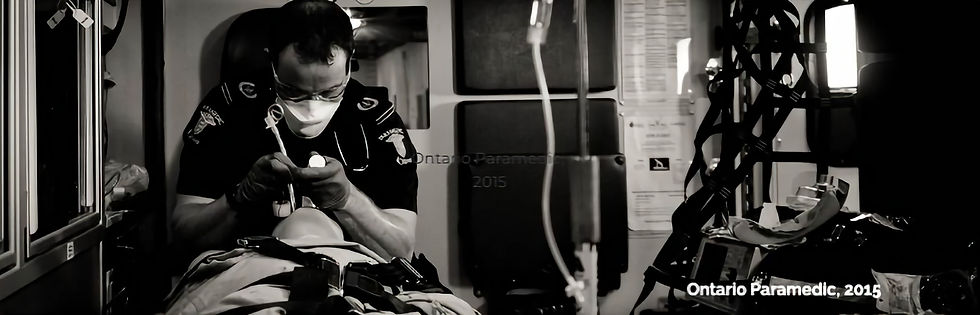
Paramedicine has evolved from transport vehicles to medical practitioners. The current state of paramedicine reflects a profession that is at a crossroads. One that needs innovation with respect to funding, legislation, education, technology, and overall culture. Let’s give paramedics a seat at the table with our fellow healthcare practitioners. In this post, I will provide a brief history of paramedicine in Ontario. From there, I will outline various areas of paramedicine in their current state with recommendations for improvement.
The first municipally funded ambulances were established in Toronto in 1880 and in Kitchener-Waterloo by 1903 (History of EMS, n.d.). Private companies were contracted out

of funeral homes to transport the ill and injured to hospital because they had vehicles that could be utilized for this type of transport (History of EMS, n.d.). Until the 1960s, Ontario would see ambulance services operate with little oversight, no access to funding, and minimal (if any) training for medical and traumatic needs (History of EMS, n.d.).
At this time, the Ontario Hospital Services was developed by Dr. Norman McNally, aiming for “a balanced and integrated system of ambulance services” in the province (History of EMS, n.d.). This would eventually become the Ministry of Health (History of EMS, n.d.). McNally created the first training programs, and improved vehicles and equipment (History of EMS, n.d.). McNally sought to eliminate private ambulance services through consolidation (History of EMS, n.d.). Due to financial limitations, McNally was unable to buy all the private ambulance services, which led to a mixture of private and public operations (History of EMS, n.d.).
This remained the operational structure until 1998 when the services were amalgamated under the Local Services Realignment Initiative (History of EMS, n.d.). Many major milestones were implemented with respect to care and culture while the organizational structure was developing (Image 1).
The demand on paramedics has been rapidly changing both in volume and professional expectation. I explored this dichotomy in an earlier post. According to a study by Strum et al, (2022) paramedic transport to EDs in Ontario grew at a significantly higher volume than the rest of the country (pg. 745). Paramedic transport has grown exponentially faster than walk-in visits to emergency departments (Image 2).
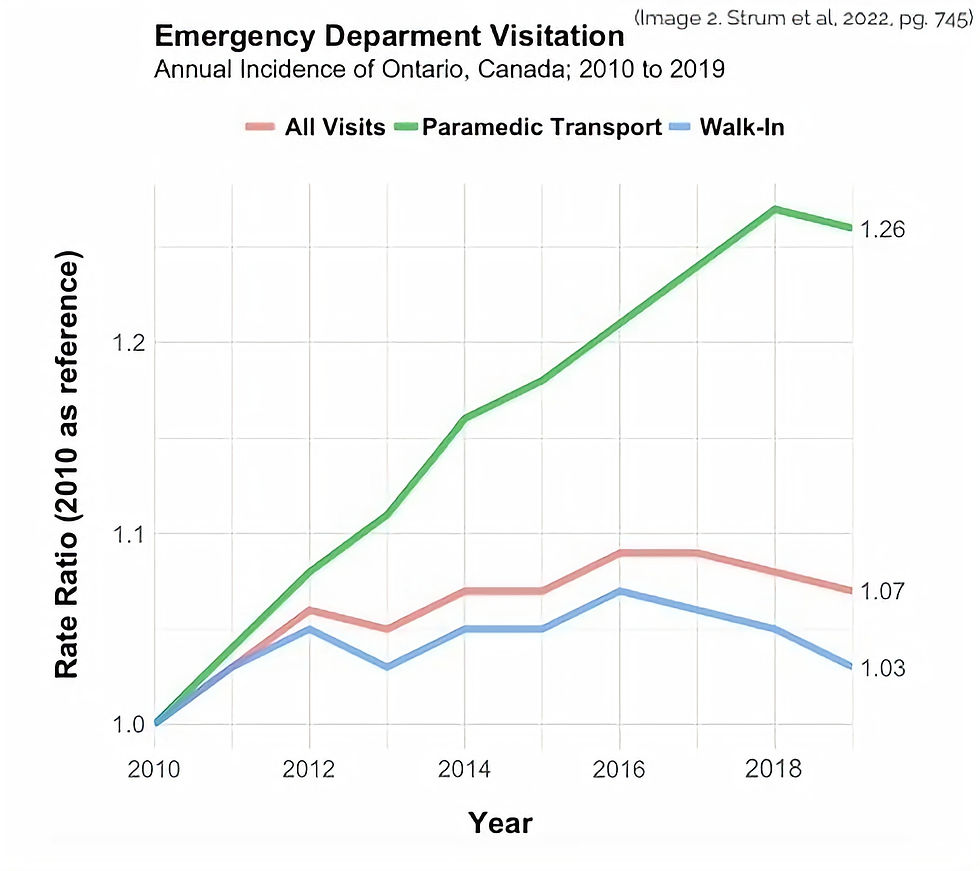
The decrease noted in 2019 has been attributed to the pandemic effects (Strum et al, 2022). There is no attributable patient population for this, however, opioid related complaints in EDs doubled between 2009 to 2019 (Beattie, 2023). Comparatively, paramedic services had 4x as many opioid related transports (Beattie, 2023).
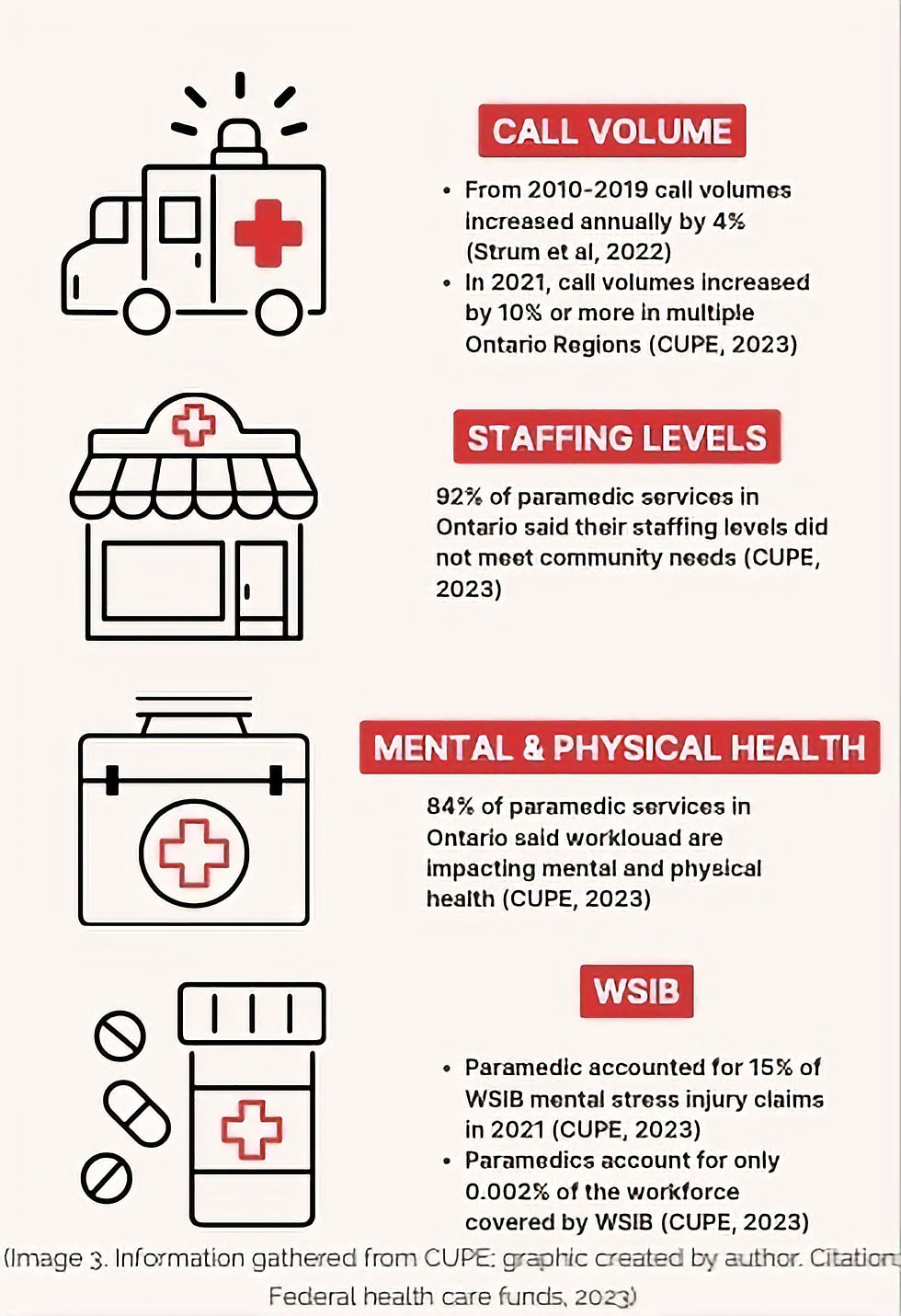
CUPE Union representatives gathered information that gives a brief glimpse at the current beliefs within paramedicine during these years of unprecedented growth in paramedic usage (Image 3).
Funding
Paramedic services have a 50/50 shared funding agreement between the provincial and municipal governments (OAPC, n.d.). Ontario Association of Paramedic Chiefs (OAPC) recognized this cost sharing agreement speaks to how paramedicine has historically teetered between provincial healthcare and municipal first response (OAPC, n.d.). New models of care and initiatives presented below have opened conversations with our legislative bodies about how paramedicine can bridge the gaps in healthcare. Funding for programs that fall outside the scope of practice (like Community Paramedicine) are 100% funded by the province (OAPC, n.d.).
(Community Paramedicine is broken down in more detail here)
Currently, the government has budgeted $74 million over 10 years to the Canadian Healthcare Fund (Federal health care funds, 2023). Paramedic services and Unions argue that a sizeable portion of these funds need to be allocated to paramedic services.
“Paramedics ... continue to feel abandoned by the ... government. Due to chronic underfunding, we were struggling to serve our communities even before the pandemic ... the surge in 911 calls in the past 3 years without a corresponding increase in staffing levels has exacerbated the crisis (Federal health care funds, 2023)”
“We need [funding] that reflect[s] service delivery, improve[s] equity and encourage[s] solutions (OPAC, n.d., pg. 19).” OAPC recommend that “the current 50/50 cost sharing formula should be maintained as a minimum level ... Alternatives are needed that go beyond [this] (OPAC, n.d., pg. 19)”
Hospital funding improves paramedic operations. In 2023, a multi-million-dollar investment to keep nurses and support for new graduates was approved (Zych & Alarcon, 2023). Staffing hospitals, long-term care homes, and primary care teams with qualified nurses could help improve the overall function of Ontario healthcare and reduce the stress on our emergency systems.
LEGISLATION
The following outlines the current legislative bodies that govern paramedicine in Ontario:
The Ambulance Act (1966)– The Ambulance Act is the primary governing body for paramedicine. The Act undergoes a review every three years, with minimal changes since its inception (OAPC, n.d.). In 2019, the review introduced changes that allowed for alternative destinations (transport patients to more appropriate community settings rather than an ED) (OAPC, n.d.).
Opportunity for Improvement
The Act is outdated and does not align with our current service demands. OAPC called for a comprehensive review including renaming 	the act to better reflect paramedics role as healthcare professionals (n.d).
Ministry of Health Emergency Services Division (MOH) – paramedicine’s legislative oversight. MOH completes inspection, certification, and investigation of all services within the province (OAPC, n.d.). Paramedic certification is approved through successful completion of the provincially delivered Advanced Emergency Medical Care Assistant (AEMCA) Exam.
Opportunity for Improvement
MOH involvement in other health professions is limited to operations, not practitioner supervision (OAPC, n.d.).
Regulated Health Professions Act - Paramedics do NOT fall under this act. (OAPC, n.d.)
Opportunity for improvement
Paramedics should be reflected under the act. This is discussed further here. Regulatory colleges have improved patient care 			outcomes (Image 5).
EDUCATION
A two-year college program is required. Curricula is governed by standards laid out by the Ministry of Education (Allana & Pinto, 2021). In Your Health: A Plan for Connected and Convenient Care, the government addressed the need to hire more healthcare workers. In a time of critical staffing shortages, they added more than 300 spots in paramedic programs at colleges across the province in 2023 (Ontario Helping, 2023). Jill Dunlop, Ministry of Colleges and Universities stated, “[This] will play a critical role in addressing the current shortage of paramedics by preparing more highly-skilled health professionals to enter the workforce ...” (Ontario Helping, 2023).
There is reform in paramedic education happening in other countries (Allana & Pinto, 2021). The UK, Australia, and New Zealand have established bachelors- and masters-level degree programs (Allana & Pinto, 2021). Canada is working toward a 3-year diploma for minimum entry to practice (Allana & Pinto, 2021).“[University training] presents an opportunity for paramedic educators to collaborate with faculties of nursing, social work, and medicine (Allana & Pinto, 2021, pg. 71)”
With changes in scope and complexity of care, reform of Ontario’s educational standards to reflect our contribution to healthcare is important. OAPC points out that many healthcare professions have seen a similar evolution that allowed for increased skill and knowledge at entry (OPAC, n.d.). OAPC has stressed the value of creating a 4-year degree program for entry to practice. “As paramedics continue to rise to the challenges of meeting evolving community needs, playing a greater role in alleviating system pressures, and being a trusted partner with other healthcare professionals, expanding the knowledge base of paramedics is critical (OAPC, n.d., pg 24).” Improved education would solidify the profession within the greater healthcare sector while providing opportunities for increased evidence-based research to allow for better care for our communities (OPAC, n.d.).
TECHNOLOGY AND PROTOCOL CHANGES
As mentioned, there have been many changes in the expectation of the paramedic without the changes needed to support these expectations. Ontario has introduced various programs to help alleviate some system stressors including alternative destinations, treat-and-release protocols, palliative care programs to reduce suffering and honour end of life wishes at home, and Fit2Sit programs that promote streamlined transfers of care in EDs
when patients are deemed appropriate for the waiting room. All these programs must be regionally implemented, but government support is a huge step forward.
Many changes to technology would be welcomed. New technologies could aid in the rapid identification of critical conditions, leading to improved patient outcomes. Sunnybrook Regional Hospital has a 5-year study on drone delivery of Automated External Defibrillators to bystanders (Drone research study, n.d.). This could be especially beneficial in rural communities.
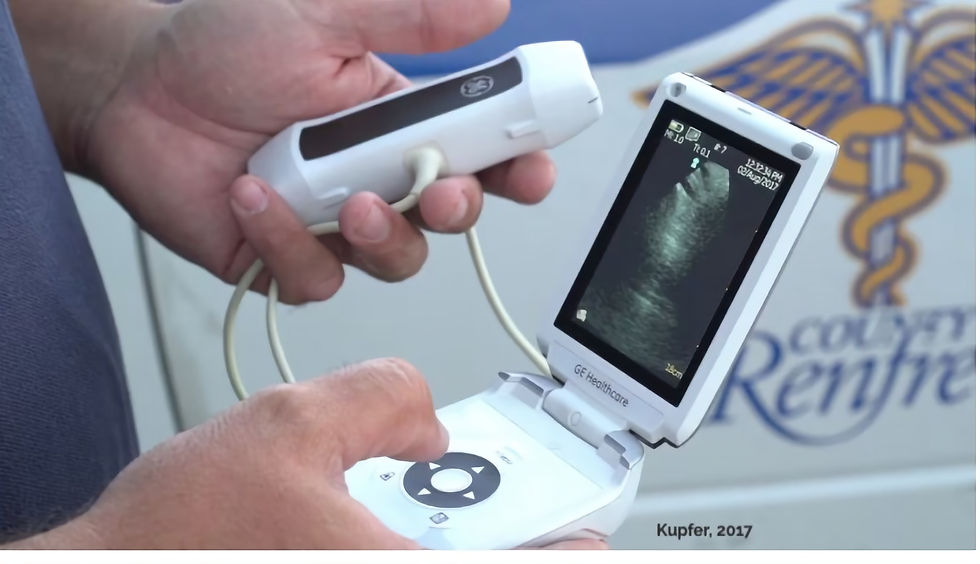
Many providers have urged for Portable Ultrasound Devices that could benefit paramedics in traumas, cardiac arrests, and obstetric emergencies (and more) (Jordan, 2023). High fidelity training simulations as an educational tool for both working and new-to-the-workforce paramedics could help replicate high stress scenarios for improved performance in real life (Jordan, 2023). Point-of-Care Testing for rapid results in emergency situations could include blood gas analysis, infectious disease tests, urine testing, and blood tests (Jordan, 2023).
A cultural shift is needed. Paramedics needed to be included in conversations with our allied health agencies. Including paramedics in the Quality of Care Information Protection Act will allow us to be involved in educational opportunities by creating a safe inter-agency space to discuss various healthcare incidents (OAPC, n.d.). Removing these barriers by further providing paramedics with a way to access data and personal health information can improve patient care (OAPC, n.d.). Historically, paramedicine has been primary a trauma and transport mechanism for out of hospital incidents, “there is a need for the paramedic profession in Canada to update its definition of a ‘paramedic’ and embrace an identity that more fully reflects the broad spectrum of primary and emergency care paramedics now provide (Allana & Pinto, 2021)”.

Allana, A., & Pinto, A. (2021). Paramedics have untapped potential to address social determinants of health in Canada. Healthcare Policy | Politiques de Santé, 16(3), 67–75. https://doi.org/10.12927/hcpol.2021.26432
Beattie, S. (2023, September 12). Ontario paramedics see number of patients rushed to hospital related to opioid use quadruple in decade: Study | CBC News. CBCnews. https://www.cbc.ca/news/canada/hamilton/paramedic-opioid-patients-study-1.6963437
Drone Research Study. Region of Peel. (n.d.). https://www.peelregion.ca/paramedics/programs/drone-research.asp
Federal health care funds must be invested in paramedics and the broader public health care system: CUPE Paramedics. Canadian Union of Public Employees. (2023, February 24). https://cupe.ca/federal-health-care-funds-must-be-invested-paramedics-and-broader-public-health-care-system-cupe
History of EMS in Ontario. Ontario Association of Paramedic Chiefs. (n.d.). https://www.oapc.ca/history/
Jordan, A. (2023, July 26). Advances in emergency medical technology. Unitek EMT. https://www.unitekemt.com/blog/advances-in-emergency-medical-technology/#:~:text=Point%2Dof%2Dcare%20testing%20(,%2C%20molecular%20tests%2C%20and%20imaging.
King’s Printer. (2023). Your Health: A plan for connected and convenient care. Retrieved March 25, 2024, from https://files.ontario.ca/moh-your-health-plan-connected-convenient-care-en-2023-02-02-v3.pdf.
Kupfer, M. (2017, August 3). Renfrew paramedics testing cutting-edge ultrasound in the field | CBC News. CBCnews. https://www.cbc.ca/news/canada/ottawa/michael-nolan-renfrew-paramedic-ultrasound-1.4233084
Ontario Association of Paramedic Chiefs (OAPC). (n.d.). Policy framework on the Future of paramedicine in Ontario: Charting a new course for paramedic services to do more for healthcare. Toronto, ON.
Ontario Expanding Innovative Models to Deliver Better, Connected Care. Ontario newsroom. (2021, April 26). https://news.ontario.ca/en/release/1000003/ontario-expanding-innovative-models-to-deliver-better-connected-care
Ontario Helping More Students Become Paramedics. (2023, June 29). Ontario Newsroom. Retrieved March 20, 2024, from https://news.ontario.ca/en/release/1003215/ontario-helping-more-students-become-paramedics.
Ontario Paramedic. (2015, July 27). History of paramedics in Ontario. Ontario Paramedic Association. https://www.ontarioparamedic.ca/before-9-1-1/history-of-paramedics-in-ontario.
Strum, R. P., Drennan, I. R., Mowbray, F. I., Mondoux, S., Worster, A., Babe, G., & Costa, A.P. (2022). Increased demand for paramedic transports to the Emergency Department in Ontario, Canada: A population-level descriptive study from 2010 to 2019. Canadian Journal of Emergency Medicine, 24(7), 742–750. https://doi.org/10.1007/s43678-022-00363-4
Zych, M., & Alarcon, V. (2023, March 24). Rnao says budget recovery plan leaves the health of Ontarians and nursing behind. RNAO.ca. https://rnao.ca/news/media-releases/rnao-says-budget-recovery-plan-leaves-the-health-of-ontarians-and-nursing





Comments